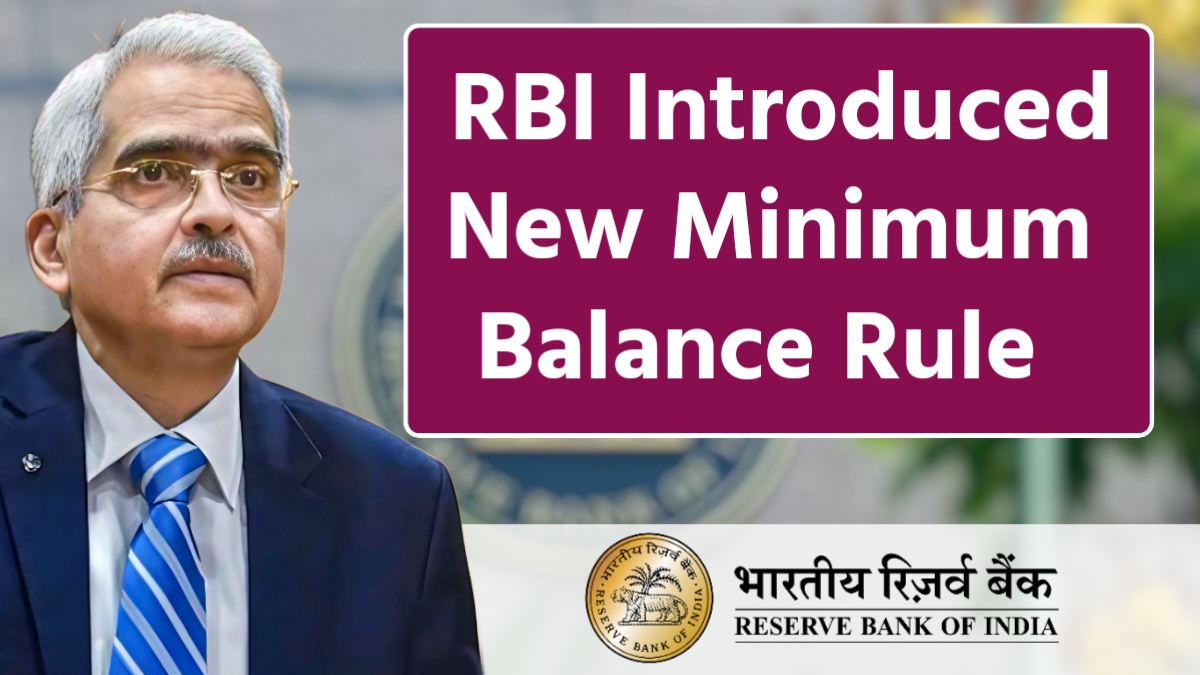
RBI New Rule 2026: Discussions around minimum balance requirements in savings accounts have once again drawn attention after recent conversations about banking transparency and customer awareness in India. The Reserve Bank of India periodically reviews banking practices to ensure that financial institutions communicate charges and service conditions clearly to account holders. In 2026, renewed focus on minimum balance rules has prompted many customers to review how these requirements work and how banks apply penalties when balances fall below the required level.
For millions of people who rely on savings accounts for daily transactions, salary deposits, and digital payments, understanding minimum balance policies can help prevent avoidable charges. According to reports, banks may be encouraged to strengthen communication about balance requirements and service fees so customers are not surprised by deductions. In practical terms, this means clearer notifications through SMS alerts, mobile banking apps, or account statements. While the core rules governing minimum balances have existed for years, ongoing updates aim to improve transparency and customer awareness across metro, urban, semi-urban, and rural banking networks.
How Minimum Balance Policies Work in Savings Accounts
A minimum balance is the amount customers are generally required to keep in their savings account to maintain normal banking services without additional charges. The exact limit often depends on the type of account and the location category of the bank branch. Metro branches usually have higher balance expectations compared to rural branches, reflecting differences in operating costs and banking infrastructure.
For example, a metro savings account in many banks may require around ₹10,000 to avoid service charges, while semi-urban or rural branches may set lower thresholds. If the account balance drops below the required level for a certain period, banks may apply a maintenance fee. These penalties vary widely across institutions, so customers are usually advised to review the specific terms listed in their bank’s account documentation.

Why Banks Set Different Balance Levels Across Cities
The structure of minimum balance requirements is closely tied to how banks classify their branches. Metro locations typically involve higher operational expenses, including technology infrastructure, customer service operations, and branch maintenance. As a result, savings accounts in these locations may require a higher average balance compared to branches located in smaller towns.
In contrast, rural and semi-urban branches often serve customers with different financial patterns, including agriculture-based income or small business earnings. Lower minimum balance requirements in these areas help maintain accessibility to banking services. According to available guidelines, banks have the flexibility to define their own limits within regulatory frameworks, provided customers are clearly informed about applicable rules and charges.
Financial Impact When Balances Fall Below Required Limits
When an account balance remains below the prescribed threshold, banks may apply service charges that vary depending on the account category. In some institutions, penalties may range from around ₹50 for rural accounts to several hundred rupees for metro-based accounts. These deductions are typically applied periodically, such as monthly or quarterly, based on the bank’s policy.
Consider a practical example: if a metro savings account requiring ₹10,000 consistently stays around ₹7,000 during a billing cycle, the bank may impose a maintenance fee as per its schedule of charges. Over time, repeated penalties could gradually reduce the account balance further. Financial advisers often recommend keeping a small buffer amount above the required limit to reduce the risk of accidental deductions.
Customer Communication and Transparency Measures
Recent discussions around banking updates have highlighted the importance of clear communication between banks and customers. Regulators encourage banks to notify account holders about minimum balance conditions at the time of account opening and through periodic reminders. Digital channels such as mobile banking apps and SMS alerts are increasingly used to deliver these updates.
An independent banking analyst recently noted, “Transparent fee disclosure is essential for trust in the banking system. Customers should know exactly when charges may apply and how to avoid them.” Such communication practices are designed to help customers manage their finances more effectively while reducing disputes related to unexpected deductions.
Account Types With Flexible Balance Conditions
Not all savings accounts require a high minimum balance. Many banks offer specialized accounts designed for different customer groups. Student accounts, salary accounts, and basic savings bank deposit accounts may allow very low balances or even operate without a mandatory minimum requirement. These options are intended to expand financial inclusion and provide easier access to banking services.
For instance, a basic savings account typically allows customers to deposit and withdraw funds without maintaining a fixed balance. However, these accounts may have certain transaction limits or service restrictions compared to regular savings accounts. Customers choosing such accounts should review the terms carefully to understand how they differ from standard savings products.
Steps Customers Can Take to Stay Within Banking Guidelines
Maintaining awareness of account conditions is one of the simplest ways to avoid unnecessary charges. Monitoring balances through online banking, setting up SMS alerts, and reviewing monthly statements can help customers identify situations where their account balance is approaching the minimum threshold. Many banks also provide automated notifications when balances fall below required levels.
Verification is recommended by checking the official website of the respective bank or contacting the branch directly. Since minimum balance requirements may change over time depending on institutional policies or regulatory guidance, confirming the latest rules ensures accurate information. In practical terms, maintaining a modest financial buffer and selecting an account that matches one’s financial habits can help reduce service fees.
Disclaimer: This article is intended for general informational purposes. Minimum balance requirements, service charges, and banking policies may vary between banks and account types. Customers should verify the latest details through their bank’s official communication channels or branch offices before making financial decisions.